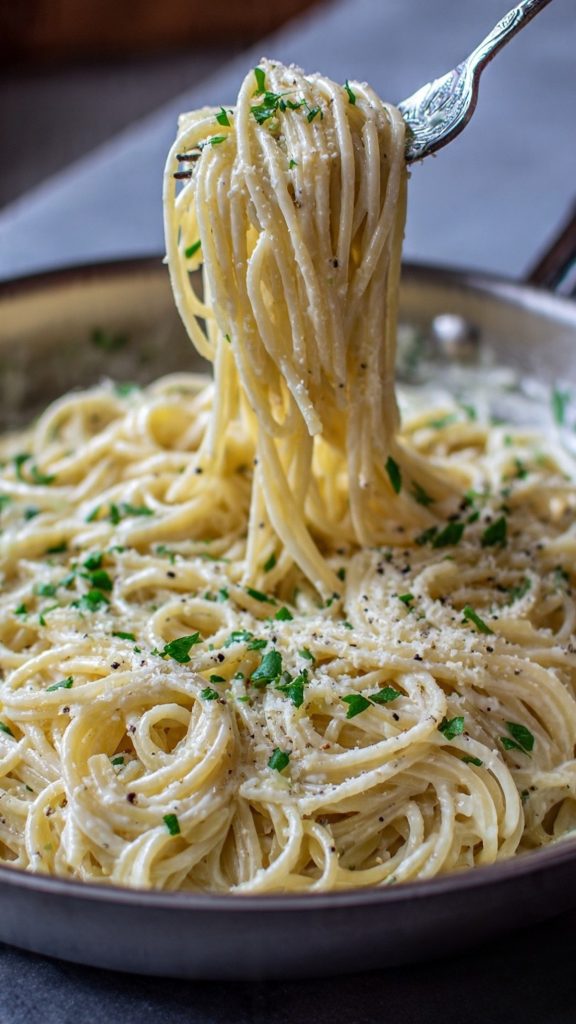
Garlic Parmesan Pasta is one of those dinners I reach for when I want something that feels special but takes almost no effort. The real star here is the Parmesan. When you treat it right, it gives you a salty, nutty, ultra-savory sauce that tastes like you fussed over it, even if you tossed it together between work emails and setting the table.
I like this recipe because it really lets the cheese do its job. There’s no long ingredient list, no complicated steps, and no heavy cream required. Just good Parmesan, garlic, butter, broth, and milk turning into a silky sauce that clings to every strand of pasta. It’s easy to scale up for a crowd and feels at home next to grilled chicken, a big salad, or a platter of roasted veggies.
If you’re entertaining, this Garlic Parmesan Pasta is perfect for those nights when people are chatting in the kitchen and you don’t want to be stuck measuring 15 ingredients. You can build the whole dish in one skillet, finish it right before serving, and carry it straight to the table. As long as you start with decent Parmesan and don’t rush the melting, you’re set.
Garlic Parmesan Pasta, Made Easy
Click here to get printable version
Time-Tested Ingredients, with a Twist
- 1/2 cup Parmesan cheese, finely grated, brought to room temperature
- 3 tablespoons butter, divided
- 4 cloves fresh garlic, minced
- 2 cups chicken broth
- 1 cup milk
- 8 oz angel hair pasta
- Salt and pepper, to taste (optional, depending on your broth)
- Fresh parsley, chopped, for garnish
Mindful Prep, Step by Step
- Grate the Parmesan if needed and let it sit out until it reaches room temperature. Cold cheese can clump, so this step really helps it melt smoothly into the sauce.
- In a large, deep skillet, melt 2 tablespoons of butter over medium heat. Add the minced garlic and cook for 1–2 minutes, stirring now and then, until it smells fragrant but is not browned. If it starts to darken quickly, lower the heat.
- Pour in the chicken broth and stir, scraping the bottom of the pan if needed. Taste the broth and add a little salt and pepper if you think it needs more seasoning.
- Slowly add the milk while stirring, then increase the heat just enough to bring the mixture up to a gentle boil. Keep an eye on it so the milk doesn’t boil over.
- Add the angel hair pasta. You can break it in half to fit the pan or keep it long and gently press and twist it into the liquid with tongs as it softens.
- Reduce the heat to a low simmer and cook the pasta for about 4–5 minutes, stirring and turning it frequently so the strands don’t stick together or to the bottom. The pasta should be just tender and most of the liquid slightly reduced.
- When the pasta is cooked, turn the heat down to low. Stir in the remaining 1 tablespoon of butter until it’s fully melted and the pasta is coated.
- Sprinkle in the room-temperature Parmesan a small handful at a time, stirring constantly after each addition. Don’t dump it all in at once; the sauce should gradually become smooth and creamy. It may look a bit thin right away, but it will thicken as it stands for a few minutes.
- Turn off the heat and let the pasta sit for 2–3 minutes to allow the sauce to thicken and cling to the noodles. If it thickens too much, loosen it with a splash of warm milk or broth.
- Top with chopped fresh parsley and serve immediately. This is excellent with garlic bread, a simple green salad, or grilled chicken on the side.
Choosing the Right Parmesan
The Parmesan you pick makes or breaks this dish, so it’s worth a small upgrade if you can. Aim for a wedge of real Parmigiano Reggiano or at least a good-quality aged Parmesan, then grate it yourself on a fine grater or microplane. Pre-grated cheese in a bag or can often has anti-caking agents that make the sauce grainy. Finely grated cheese melts faster and more evenly, which matters for a quick stovetop pasta. If you’re cooking for a crowd, you can grate a larger batch earlier in the day and store it loosely covered in the fridge, then bring only what you need to room temperature before cooking.
Getting the Sauce Extra Creamy
For an ultra-creamy Garlic Parmesan Pasta, the key is gentle heat and gradual melting. Keep the pan at low heat when you add the cheese, and stir constantly. If the liquid is boiling hard, the cheese can separate and turn oily instead of creamy. Make sure the pasta is just slightly loose and saucy before you add the Parmesan; if it looks dry, splash in a bit more milk or broth first. You can also whisk a tablespoon of the hot liquid into the cheese in a small bowl to “temper” it, then stir that mixture back into the pan — this can help avoid clumps, especially if your kitchen is cold.
Adjusting Thickness at the End
This sauce changes quickly in the last few minutes, so stay flexible. Right off the heat, it may look a bit soupy. Give it 2–3 minutes to rest; as the pasta absorbs some liquid and the cheese sets, it naturally thickens. If it becomes too thick and sticky, don’t panic — just add a splash or two of warm milk or broth and toss until it loosens up again. On the other hand, if you want it thicker, return the skillet to very low heat and stir for another minute or two, letting a bit more liquid evaporate. Adjust right before serving so it’s creamy but still easily twirled with a fork.
Easy Add-Ins and Variations
This recipe is flexible, which is handy when feeding a group with different tastes. For extra protein, stir in shredded rotisserie chicken, sautéed shrimp, or crisp bacon right before adding the Parmesan. Toss in steamed broccoli florets, peas, or spinach for a one-pan meal. You can swap some of the chicken broth for vegetable broth if you want a lighter flavor, or use red pepper flakes and a squeeze of lemon at the end for a brighter, slightly spicy version. When scaling up, use a wider pan or two skillets so the pasta still cooks evenly and doesn’t clump.
Recipe FAQ: Common Questions
Why does my Parmesan sometimes get clumpy instead of melting smoothly?
Clumps usually come from a mix of temperature and cheese style. If the liquid is too hot and boiling aggressively, the proteins in the cheese can seize, causing little curds instead of a smooth sauce. Using cold cheese straight from the fridge can make this worse. To avoid this, use room-temperature, finely grated Parmesan, lower the heat to low before you start adding it, and sprinkle it in gradually while stirring. Also, avoid pre-shredded cheese with anti-caking agents, which resist melting.
Can I make this Garlic Parmesan Pasta ahead of time for a party?
This dish is at its best right off the stove, but you can prep smartly for entertaining. Cook the pasta slightly under al dente, then cool it on a tray with a little oil tossed through to prevent sticking. Separately, you can have the garlic, broth, and milk mixture ready to reheat. When it’s time to serve, warm the liquid, add the pasta to finish cooking, then stir in butter and Parmesan. Always add the cheese just before serving so the sauce stays smooth and fresh-tasting.
How can I keep the pasta from sticking together when serving a large group?
With angel hair, sticking can happen fast, especially if it sits. First, make sure you’re stirring frequently as it cooks and that there’s enough liquid in the skillet so it can move freely. Once it’s done and sauced, serve promptly. If it must sit for a few minutes, toss it once or twice as it rests and consider adding a tablespoon or two of extra broth or milk to keep it loose. For buffet-style serving, keep it in a wide, shallow dish and cover loosely, then stir and refresh with a splash of warm liquid right before guests start serving themselves.
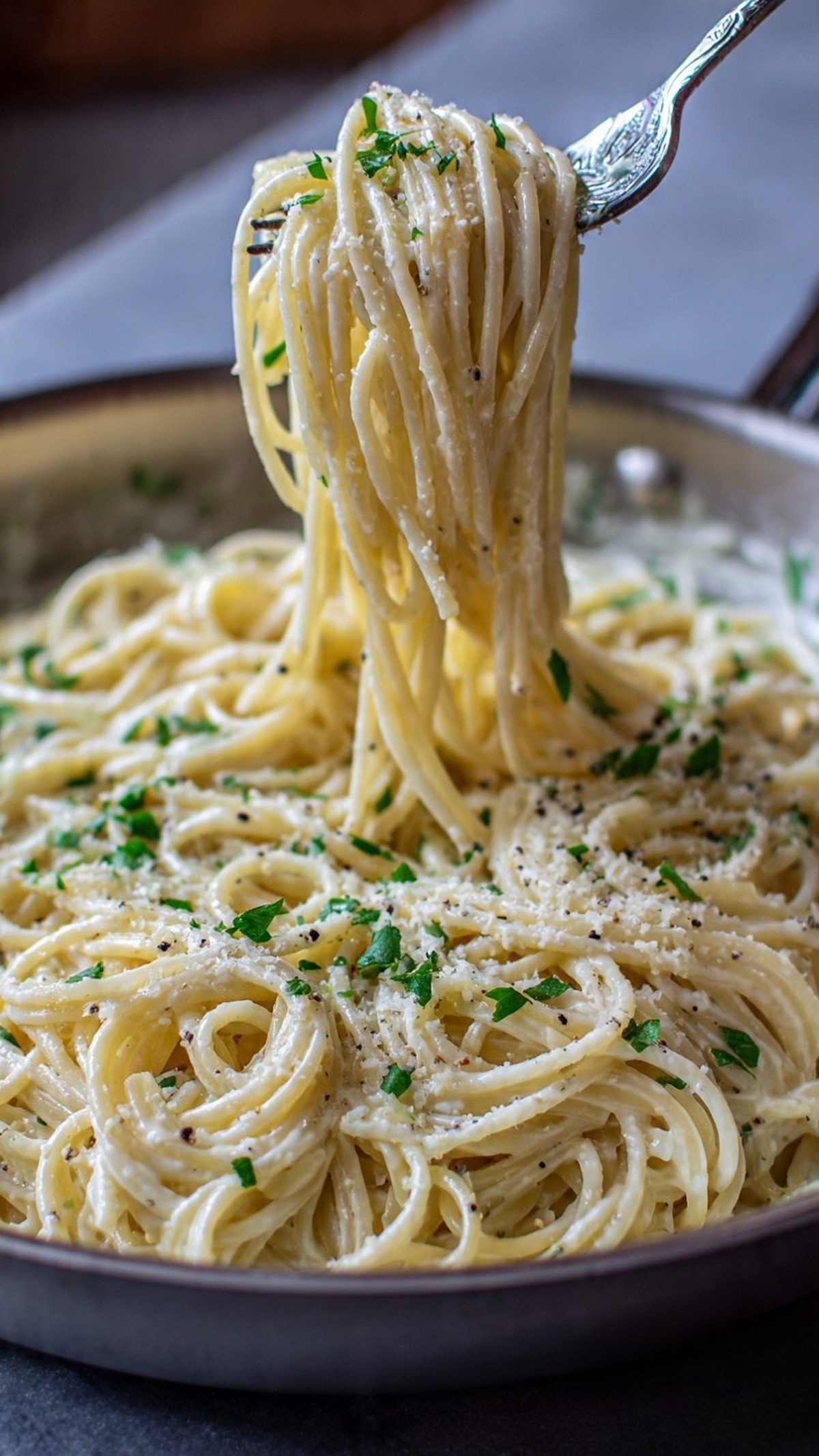
Garlic Parmesan Pasta
Equipment
- Large Skillet
Ingredients
- 1/2 cup Parmesan cheese finely grated, let sit at room temperature
- 3 tablespoons butter divided (2 Tbsp for cooking, 1 Tbsp to finish)
- 4 cloves garlic minced
- 2 cups chicken broth
- 1 cup milk
- 8 ounces angel hair pasta
- fresh parsley for garnish
Instructions
- Measure the Parmesan and leave it at room temperature so it softens slightly before using.
- Warm a large skillet over medium heat and melt 2 tablespoons of butter until it foams.
- Add the minced garlic to the melted butter and sauté for 1–2 minutes, stirring occasionally, until fragrant but not browned.
- Pour in the chicken broth, season to taste, then slowly stir in the milk while mixing. Increase heat slightly and bring the mixture to a gentle boil.
- Add the angel hair pasta to the skillet — you can break the strands in half to fit or let them soften and fold them in with tongs — and simmer, stirring frequently to prevent sticking, for about 4–5 minutes until the pasta is tender.
- Lower the heat and stir in the remaining tablespoon of butter so the pasta becomes glossy and evenly coated.
- Remove the pan from heat and gradually stir in the warm grated Parmesan until the sauce smooths out; it may seem thin at first but will thicken as it cools.
- Finish with a sprinkle of fresh parsley and serve immediately. Pair with garlic bread for a classic combo.