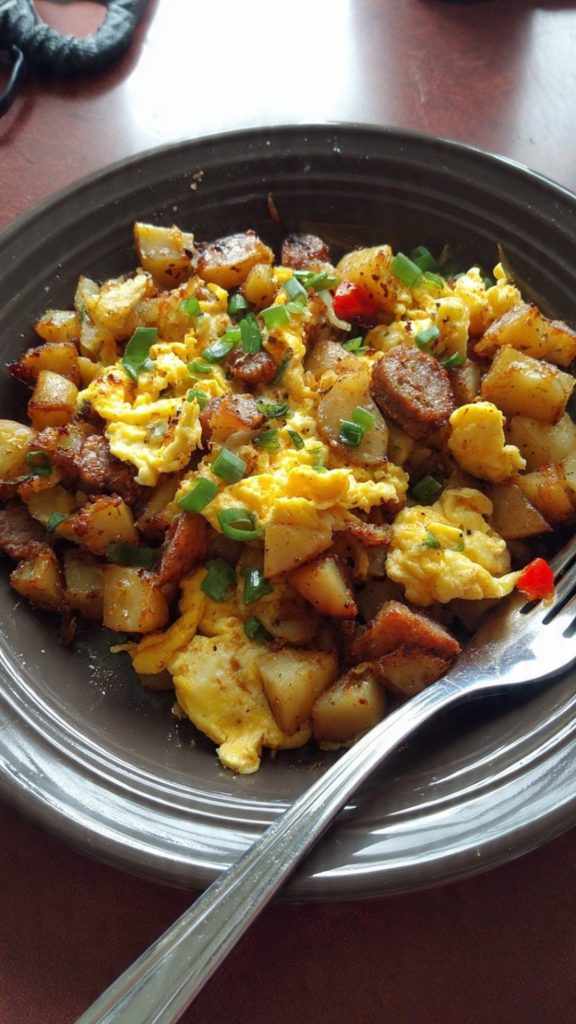
Some breakfasts ask for a full pantry and a long list of steps. This Skillet Morning Sausage Hash is the opposite. It’s the kind of meal I lean on when I want something hot, filling, and satisfying, but don’t want to think too hard. A single pan, a few reliable ingredients, and about half an hour on the clock are all you need.
I first started making this hash on early travel days, when I needed a breakfast that could handle whatever odds and ends were in the fridge. Smoked sausage, potatoes, eggs, and a bit of cheese turned out to be a combination that never failed. It’s straightforward, flexible, and works just as well in a home kitchen as it does over a camp stove.
If your mornings are busy, this recipe earns its place in your routine. You can dice the potatoes and sausage the night before, then just heat the skillet and cook. The eggs go right on top, so there’s no extra pan to wash. It’s also easy to portion: one skillet feeds four, or two very hungry people. If you like recipes that are simple, modest on ingredients, and big on practicality, this Skillet Morning Sausage Hash fits right in.
Elegant Simplicity: Skillet Morning Sausage Hash
Click here to get printable version
Clean, Wholesome Ingredients
- 2 tablespoons olive oil
- 1 pound Yukon Gold potatoes, diced into 1/2-inch cubes
- 4 links fully cooked smoked sausage, diced into 1/2-inch cubes
- Salt and pepper, to taste
- Pinch of red pepper flakes
- 4 large eggs
- 1/3 cup shredded cheddar cheese
- 2 scallions, diced
- Crusty bread, for serving
Simplicity in Action
- Set a 12-inch cast iron skillet over medium heat and add the olive oil. When the oil looks shimmering, add the diced Yukon Gold potatoes in an even layer. Cook for 8–10 minutes, stirring every couple of minutes so they don’t stick or burn. The potatoes should start to soften and get light golden spots.
- Stir in the diced smoked sausage, spreading it through the potatoes. Continue cooking for about 5 minutes, stirring occasionally, until the sausage edges are lightly charred and the potatoes are golden and crisp on the outside but tender when pierced with a fork.
- Season the hash with salt, pepper, and a pinch of red pepper flakes. Taste a piece of potato and adjust the seasoning now; it’s easier to get it right before the eggs go in.
- Use the back of a spoon to make four small wells in the hash, spacing them evenly. Crack one egg into each well, keeping the yolks intact if you like them runny. If a well fills too quickly, gently nudge some potatoes away to create space for the whites.
- Sprinkle the shredded cheddar cheese evenly around the eggs, focusing on the potatoes rather than directly on top of the yolks. This helps the cheese melt into the hash and keeps the yolks visible so you can judge doneness.
- Let the skillet cook over medium or medium-low heat until the egg whites are completely set and no longer clear, but the yolks are still soft. This usually takes 4–6 minutes. For more control, you can loosely cover the pan with a lid to help the whites set faster without overcooking the bottoms.
- Turn off the heat and scatter the diced scallions over the top. Serve the hash immediately straight from the skillet, with torn crusty bread on the side for dipping into the yolks and scooping up the cheesy potatoes and sausage.
Crispy Potato Shortcut
If you want reliably crisp potatoes without babysitting the pan, there are a few small changes that make a big difference. First, dice the potatoes into even 1/2-inch cubes so they cook at the same pace. If you have 5 extra minutes, rinse the diced potatoes in cold water and pat them very dry; this removes excess surface starch and helps them brown instead of steam. Use a preheated skillet and add the potatoes in a single layer so they make full contact with the pan. Avoid constant stirring: let them sit for 2–3 minutes at a time to form a crust, then flip. If they’re browning too fast before becoming tender, reduce the heat slightly and cover for 2 minutes, then uncover to re-crisp before adding sausage.
Best Sausage Swaps
Smoked sausage gives this hash a lot of flavor, but you can easily adapt it to what’s available or what’s on sale. Fully cooked kielbasa or andouille are great one-to-one swaps and keep the same quick cooking time. If you’re using raw breakfast sausage links, slice or crumble them and cook them first in the skillet until browned and fully cooked, then remove and proceed with the potatoes in the rendered fat plus a bit of oil if needed. For a lighter option, chicken or turkey sausage works well, as long as it’s well-seasoned. Vegetarians can use a firm, smoked tofu or plant-based sausage; just sear until browned before combining with the potatoes so it holds its texture.
Egg Doneness Tips
Controlling egg doneness in a skillet hash comes down to heat and timing. If you prefer runny yolks with just-set whites, keep the heat at medium-low after you add the eggs and start checking at the 4-minute mark. The whites should be opaque with no clear liquid around the yolk. For jammy yolks, let them go 1–2 minutes longer. If you like firm yolks, cover the skillet with a lid to trap steam and cook for 7–8 minutes, checking once so they don’t overcook. Remember the eggs will continue to firm up slightly from residual heat, so stop cooking when they’re just a touch softer than your ideal.
FAQ: All You Need to Know
Can I make Skillet Morning Sausage Hash ahead of time for meal prep?
You can partially prepare this dish for meal prep, but a few adjustments help keep the texture appealing. Cook the potatoes and sausage fully, then cool and store them in an airtight container for up to 3 days. When you’re ready to eat, reheat the hash in a hot skillet with a splash of oil until the potatoes re-crisp. Then make the wells, add fresh eggs, and cook them to your preferred doneness. Avoid cooking the eggs in advance if you care about runny yolks, as they will overcook when reheated and can turn rubbery.
What type of pan works best if I don’t have a cast iron skillet?
If you don’t own a cast iron skillet, a heavy-bottomed stainless steel or nonstick pan around 11–12 inches wide will also work. The key is using a pan that distributes heat evenly so the potatoes brown without burning. With stainless steel, make sure the oil is well-heated before adding potatoes to help prevent sticking. With nonstick, use medium heat at most to protect the coating and avoid using metal utensils. In both cases, avoid overcrowding; if the pan is smaller, cook the hash in two batches or reduce the recipe.
How can I reduce the sodium or calories in this recipe without losing flavor?
To lighten up Skillet Morning Sausage Hash, start by choosing a lower-sodium or poultry-based sausage and use a bit less per serving. You can also cut the cheese down to 1/4 cup or switch to a sharp cheddar, which delivers more flavor in a smaller amount. Season with extra black pepper, scallions, and a pinch of red pepper flakes instead of more salt. Swapping half the potatoes for diced vegetables like bell peppers or zucchini reduces overall calories and adds volume. Just remember to cook watery vegetables briefly before adding eggs so the hash doesn’t turn soggy.
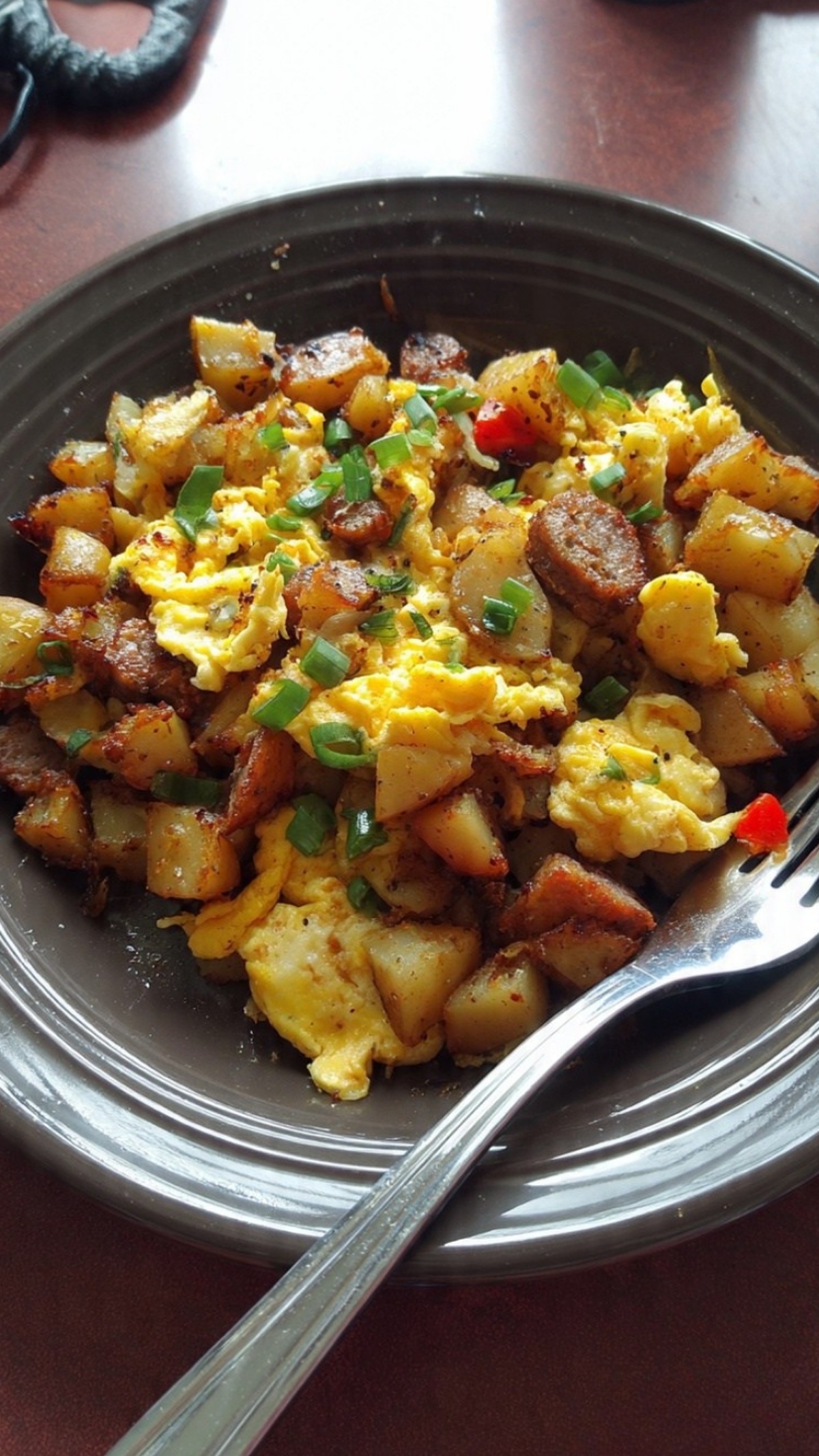
Skillet Morning Sausage Hash
Equipment
- 12 inch cast iron skillet
Ingredients
- 2 tablespoons olive oil
- 1 pound Yukon Gold potatoes diced into 1/2-inch cubes
- 4 links fully cooked smoked sausage diced into 1/2-inch cubes
- to taste salt
- to taste black pepper
- pinch red pepper flakes
- 4 large eggs
- 1/3 cup shredded cheddar cheese
- 2 scallions diced
- crusty bread for serving, torn for dipping
Instructions
- Heat the olive oil in a 12-inch cast iron skillet over medium heat.
- Add the diced Yukon Gold potatoes and cook, stirring occasionally, until they begin to soften and develop golden edges, about 8–10 minutes.
- Stir in the cubed smoked sausage and continue to cook until the sausage is slightly charred and the potatoes are crisp and browned, about 4–6 more minutes.
- Season the mixture with salt, freshly ground black pepper, and a pinch of red pepper flakes to your liking.
- Use the back of a spoon to make four shallow wells in the hash, then crack an egg into each well.
- Sprinkle the shredded cheddar evenly around the eggs so it melts into the hash as it cooks.
- Cook until the egg whites are set but the yolks remain soft and runny; if needed, cover the skillet briefly to help the whites finish cooking without overcooking the yolks.
- Scatter the diced scallions over the finished hash and serve immediately with torn crusty bread for dipping.