Think others will like this? Share it!
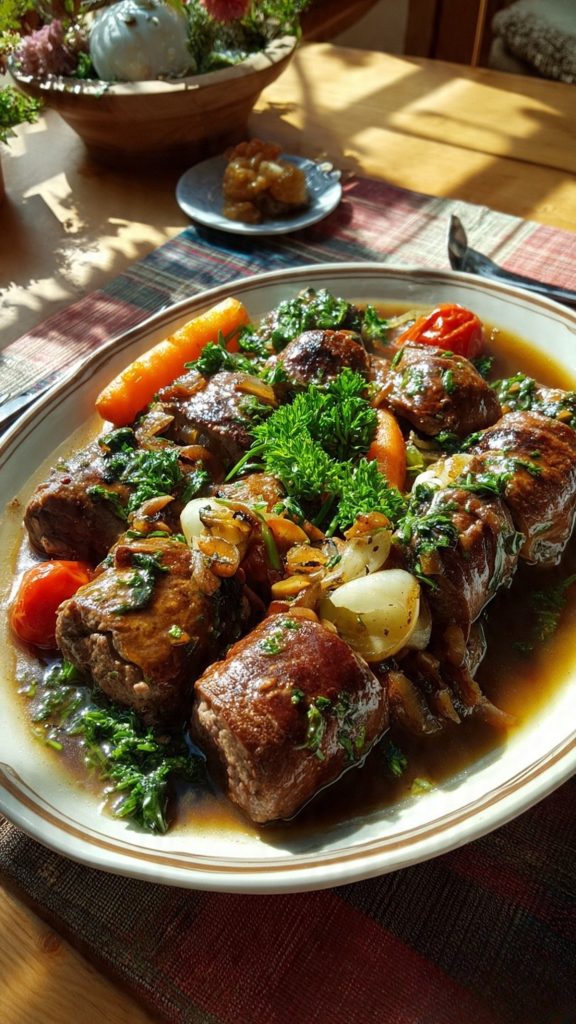
When I’m craving something cozy but still want fresh, bright flavor, German Rouladen hits that sweet spot. It looks impressive on the table, but it’s really just thin slices of beef wrapped around everyday ingredients: mustard, onions, carrots, pickles, and bacon if you want it. The result is a plate full of color, satisfying textures, and a rich gravy that feels special without being fussy.
This is one of those recipes that proves you don’t need expensive cuts of meat to eat well. Using thin-sliced round roast and a simple braise, you end up with tender beef that practically falls apart. The vegetables inside stay pleasantly firm, so every bite has a mix of soft, crisp, and juicy. The mustard and pickles bring a tangy brightness that keeps the dish from feeling heavy, even though it’s hearty and filling.
I like this recipe for busy days because most of the hands-on work is up front. Once the beef rolls are seared and simmering, the pot basically takes care of itself. You can prep a side of potatoes, noodles, or a simple salad while the Rouladen gently cooks. It’s a great make-ahead option too; the flavors actually deepen if you cook it earlier in the day and reheat it in the gravy.
If you’re trying to cook more from your pantry and freezer, this is a smart one to keep in rotation. Mustard, pickles, onions, and carrots are all affordable staples, and you can stretch a modest amount of beef into eight generous servings. The gravy uses the cooking liquid you already have in the pot, so nothing goes to waste. You end up with a meal that feels complete, comforting, and nourishing without a long ingredient list.
German Rouladen also teaches a few useful techniques you can use in other recipes: how to sear for maximum flavor, how to braise tougher cuts until tender, and how to build a quick, silky gravy from pan drippings. Once you’ve done it once, you’ll see it’s very doable, even if you’re not an experienced cook. If you like vibrant, savory flavors and value meals that actually leave you energized instead of weighed down, this one’s worth trying.
Simple Steps to German Rouladen
Click here to get printable version
Things to Grab
- 2–3 lbs round roast, sliced lengthwise into thin 1/8-inch slices*
- 8–12 slices bacon (optional)
- 1 onion, very thinly sliced
- 2 carrots, very thinly sliced into julienne strips
- 2 whole dill pickles, thinly sliced
- 1/2 cup German mustard (or Dijon or stone-ground mustard)
- Salt and pepper
- Toothpicks
- 2 tablespoons butter or oil (or a combination)
- 1 cup water or beef broth
- 1–2 tablespoons cornstarch mixed with 1 tablespoon cold water (for thickening gravy)
Instructions
- Prep the vegetables: Slice the onion, carrots, and pickles into thin matchsticks. Aim for similar thickness so they cook evenly inside the beef rolls. Set them aside in small piles for easy assembly.
- Season and mustard the beef: Lay the thin beef slices flat on a clean board or tray. Spread each piece generously with mustard, going almost to the edges. Sprinkle lightly with salt and pepper. Don’t oversalt if you’re using bacon and pickles, since both add saltiness.
- Assemble the rolls: On each mustard-coated slice, place a strip of bacon (if using), then a few pieces of pickle, carrot, and onion along one end of the meat. Roll the beef up tightly around the filling, tucking in any loose pieces as you go. Secure each roll with toothpicks so it doesn’t unravel while searing.
- Sear the Rouladen: Heat a large Dutch oven or heavy-bottomed pot over medium-high heat. Add the butter, oil, or a mix of both. When the fat is hot and shimmering, add the beef rolls in a single layer without crowding. Brown them on all sides, turning as needed. They should be well-browned, not gray—this step builds a lot of flavor for the gravy.
- Deglaze and braise: Once the rolls are nicely seared, pour in 1 cup beef broth or water. Use a wooden spoon to scrape up all the browned bits stuck to the bottom of the pot; those bits are crucial for a rich sauce. Bring the liquid just to a simmer, then cover the pot and reduce the heat to low. Let the Rouladen cook gently for about 2 hours, until the beef is very tender.
- Make the gravy: Transfer the cooked Rouladen to a plate and tent loosely with foil to keep warm. Turn the heat under the pot up to medium-high and bring the cooking liquid to a boil. Stir the cornstarch and cold water together until completely smooth, then slowly whisk it into the boiling liquid. Whisk constantly for a minute or two until the gravy thickens to a smooth, pourable consistency. Taste and adjust with more salt, pepper, or a pinch of beef bouillon granules if you want a stronger flavor.
- Serve: Carefully remove the toothpicks from each Rouladen. Arrange the beef rolls on a platter or individual plates and spoon the hot gravy over the top. Serve right away with potatoes, noodles, or a simple vegetable side.
Best Beef Cuts to Use
Round roast is the budget-friendly classic for German Rouladen, and it works well as long as it’s sliced thinly, about 1/8 inch. Ask the butcher to slice it for you; it’s often cheaper than buying “ready-made” thin-cut meat. You can also use top round or bottom round with the same method. If your slices are a bit thick, lightly pound them with a meat mallet between two pieces of plastic or parchment to make them thinner and more tender. Avoid very fatty cuts like ribeye; you want lean meat that benefits from braising, not quick-cooking steaks. If you see “Rouladen beef” pre-cut in the store and the price is high, compare it to a whole round roast—having it sliced can save you money and give you more control over portion size.
Mustard and Pickle Options
German mustard is traditional, but you don’t need anything fancy to get great flavor. Dijon or stone-ground mustard are both excellent and usually easy to find on sale. The key is to coat the meat with a thin, even layer so every bite has flavor without being harsh or overpowering. If you’re sensitive to strong mustard, mix half mustard and half mayonnaise or sour cream. For pickles, classic dill pickles are standard, but any briny, not-sweet pickle will work. Avoid sweet pickles or relish, which can make the filling taste off. If your pickles are extra salty, go lighter on the added salt to keep the Rouladen balanced and not too salty.
Searing for Deeper Flavor
Searing is where you build most of the flavor in this dish, so it’s worth doing right. Start with a hot pan and don’t rush to flip the rolls; wait until they release easily from the bottom of the pot before turning. That’s a sign they’ve developed a good crust. If you overcrowd the pot, the meat will steam instead of brown, so work in batches if needed. You don’t need a lot of oil—just enough to lightly coat the bottom—and butter adds nice flavor but can burn, so mixing it with oil is a good idea. Those dark bits stuck to the pan after searing are exactly what you want. Once you add broth or water and scrape them up, they dissolve into the liquid and become the base of a rich, savory gravy.
Thickening a Silky Gravy
For a smooth, lump-free gravy, pay attention to temperature and timing. Always mix the cornstarch with cold water before it goes into the hot liquid—adding dry cornstarch directly will cause clumps that are hard to fix. Bring the cooking liquid to a steady boil, then slowly pour in the cornstarch mixture while whisking constantly. The gravy will thicken quickly; stop adding slurry once it reaches a consistency like light cream. If it gets too thick, thin it with a splash of broth or water. Let it simmer for another minute to cook out any starchy taste. Taste at the end and only then adjust seasoning; reducing and thickening will naturally concentrate the salt, so it’s best not to heavily salt earlier in the process.
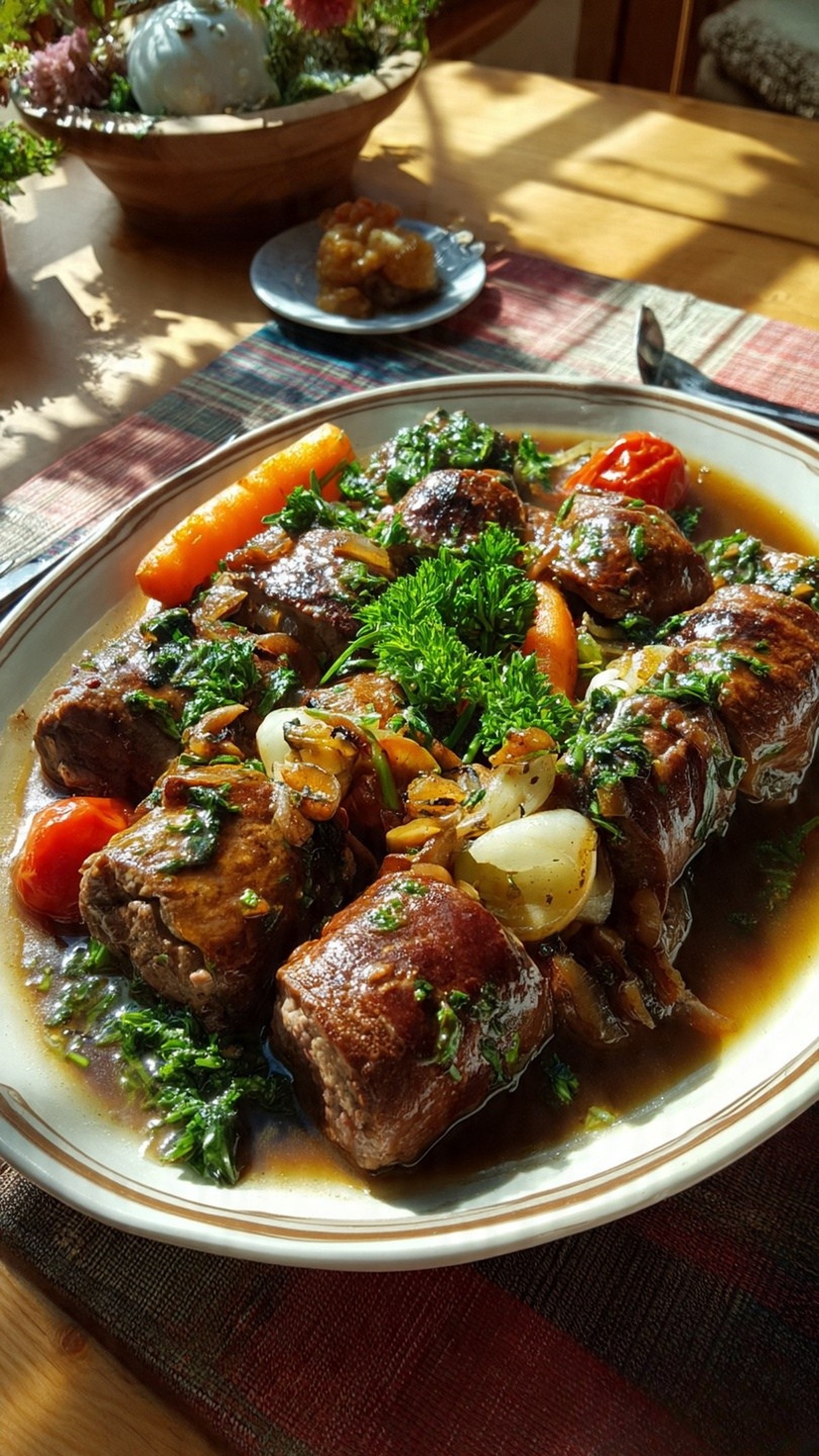
German Rouladen
Equipment
- Dutch oven or heavy-bottomed pot
Ingredients
- 2-3 lbs round roast sliced very thin lengthwise (~1/8 inch); ask butcher to slice
- 8-12 slices bacon optional
- 1 onion very thinly sliced
- 2 carrots thinly sliced into julienne (match-stick) pieces
- 2 whole dill pickles thinly sliced
- 1/2 cup German mustard or Dijon or stone-ground mustard
- salt to taste
- black pepper to taste
- toothpicks
- 2 Tablespoons butter or oil or a combination
- 1 cup water or beef broth
- 1-2 teaspoons cornstarch for thickening gravy
- beef bouillon granules optional, to taste
Instructions
- Prepare the vegetables: cut the onion, carrots and pickles into thin match-stick style pieces so they fit neatly inside the beef slices.
- Arrange the thin beef slices on a work surface. Spread each slice generously with mustard, then season with salt and pepper.
- Assemble the rouladen by placing a strip of bacon (if using) on the mustard-coated meat, then stack pickle, carrot and onion in a line near one edge. Roll the meat up tightly and secure the seam with toothpicks.
- Heat butter or oil in a large Dutch oven or heavy pot over medium-high heat. When hot, add the rouladen and brown them on all sides, turning to develop an even crust.
- Pour in 1 cup of beef broth or water, scraping the pan to loosen browned bits. Reduce the heat to low, cover the pot, and simmer gently for about 2 hours, until the meat is tender.
- Transfer the cooked rouladen to a plate. Bring the cooking juices in the pot to a boil and thicken into gravy by whisking in cornstarch dissolved in a little water. Adjust seasoning with salt, pepper or a pinch of beef bouillon if needed.
- Remove toothpicks from the rouladen, plate them, and spoon the finished gravy over the top before serving.