Think others will like this? Share it!
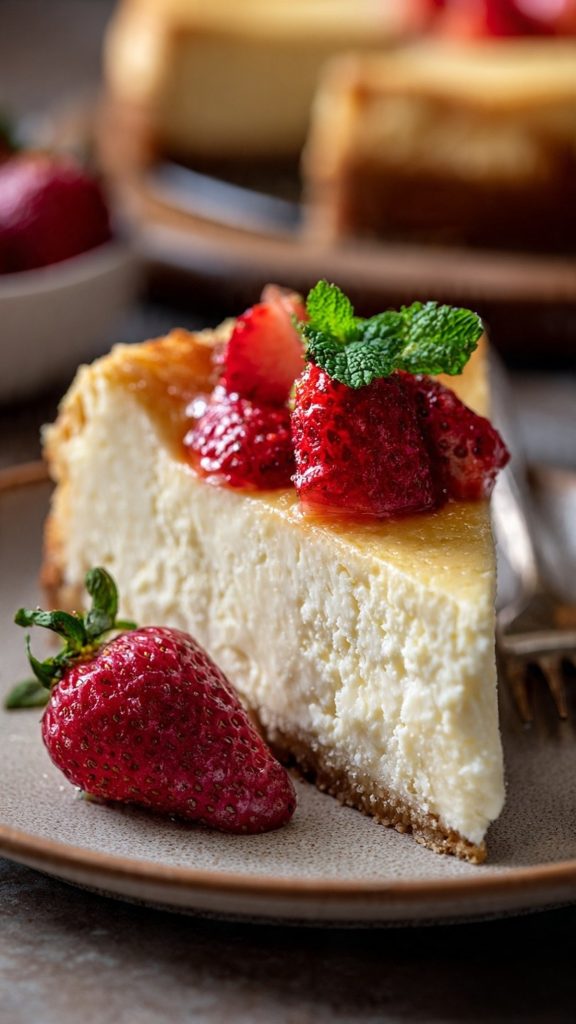
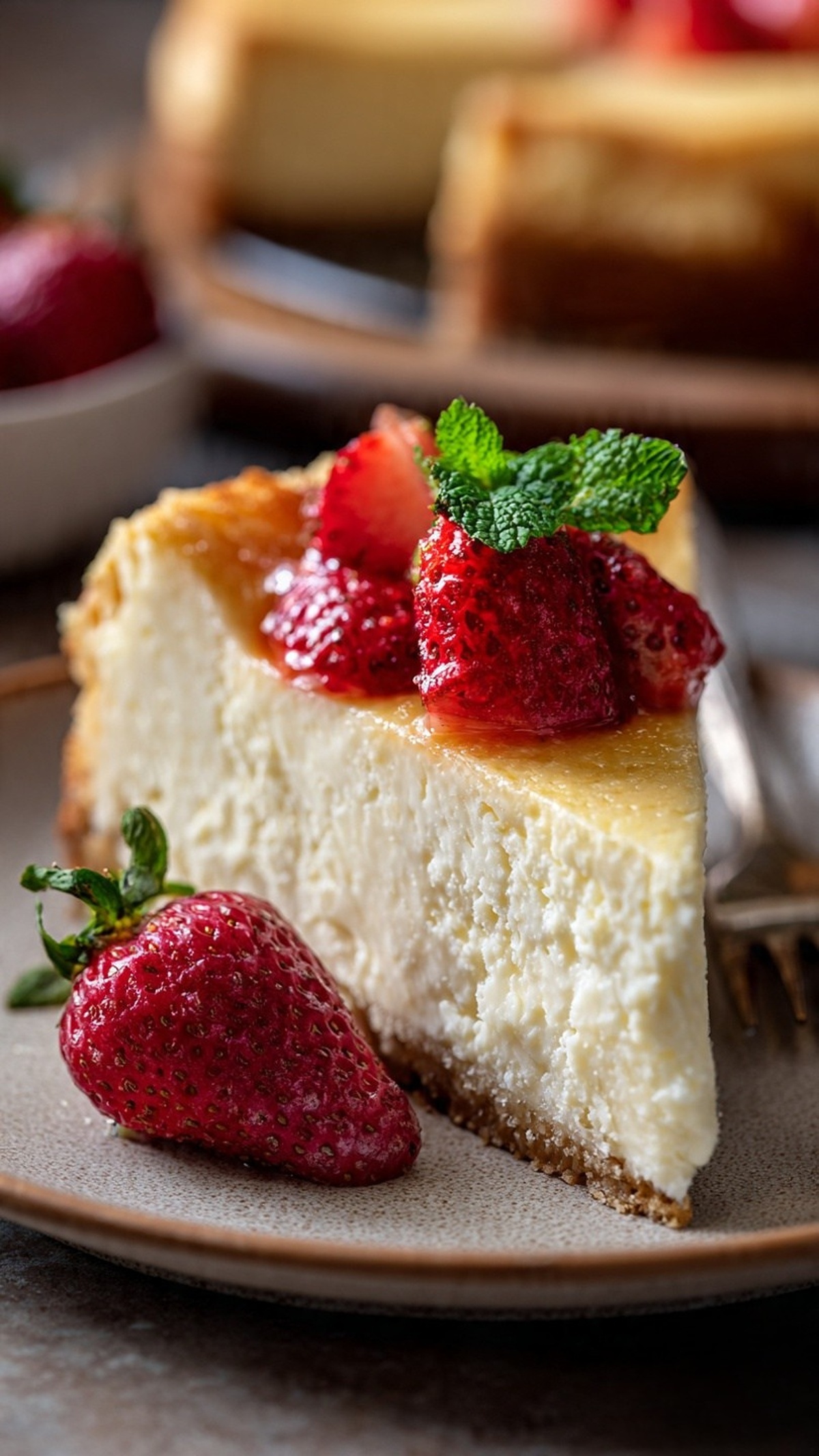
New York cheesecake is about as classic as dessert gets, but this version leans into a few small tweaks that make it feel really modern and host-friendly. The texture is dense but ultra-creamy, the top stays smooth and crack-free, and you get a bright strawberry topping that actually tastes like fresh fruit, not jammy sugar.
I like this recipe because it respects what people love about traditional New York cheesecake, but updates the method so it’s easier to pull off for a dinner party. The low-and-slow bake, the steam bath, and a few mixer rules do most of the heavy lifting for you. Once it’s in the oven, you’re basically done until it’s time to slice and serve.
If you entertain a lot, this is the kind of dessert that quietly makes your life easier. You bake it the day before, chill it overnight, and top it with strawberries right before guests arrive. It slices cleanly, serves a crowd, and feels special without demanding last-minute work. I’ll also walk you through how to scale and present it so it works for anything from a casual gathering to a more polished dinner.
Quick Guide to New York Cheesecake
Click here to get printable version
Things to Grab
For the Strawberry Topping
- 1 pound fresh strawberries, rinsed and hulled
- 1/4 cup (50g) granulated sugar
- 1 teaspoon cornstarch
- Juice of 1/2 lemon
- 1 tablespoon honey
For the Graham Cracker Crust
- 2 cups (280g) finely ground honey graham cracker crumbs (about 2 sleeves)
- 1/3 cup (70g) granulated sugar
- 1/2 teaspoon ground cinnamon
- 1/8 teaspoon kosher salt
- 1/2 cup (110g) unsalted butter, melted
For the New York Cheesecake Filling
- 4 blocks (8oz each) full-fat Philadelphia cream cheese, room temperature
- 1 1/2 cups (300g) granulated sugar
- 3 tablespoons cornstarch
- 4 large eggs + 1 large egg yolk, room temperature
- 2 teaspoons freshly squeezed lemon juice
- 2 teaspoons vanilla extract
- 1 cup (250g) sour cream, room temperature
Bringing the Story to Your Kitchen: The Method
- Make the strawberry topping base: Hull and quarter the strawberries, then set aside 1/2 cup of the fresh pieces. In a medium saucepan, whisk together the sugar and cornstarch. Add the remaining strawberries and toss until they’re evenly coated. Stir in the lemon juice and set the pan over medium heat.
- Cook, stirring occasionally, until the mixture comes to a gentle boil and the berries are very soft, about 5–8 minutes. Once tender, blend about half the mixture using an immersion blender, or transfer half to a blender/food processor and puree, then return it to the saucepan. Add the reserved 1/2 cup of uncooked strawberry pieces back to the pan, stir, and cook for about 1 more minute, until the sauce looks glossy and slightly thickened.
- Remove from the heat and stir in the honey. Transfer the topping to a container, leave it uncovered to cool to room temperature, then cover and refrigerate to chill and thicken while you make the cheesecake.
- Prep the pan and crust: Heat the oven to 350°F (177°C). Lightly spray a 9-inch springform pan with cooking spray. Line the bottom with a round of parchment, then press two long strips of parchment up the sides so they extend slightly past the rim; this makes it easier to lift the cheesecake out cleanly.
- In a medium bowl, combine the graham cracker crumbs, sugar, cinnamon, and salt. Stir in the melted butter until all the crumbs are evenly moistened and the mixture looks like wet sand that holds together when pressed.
- Pour the crumbs into the pan and press them firmly into the bottom and up the sides, almost to the top edge. Use the flat bottom of a small measuring cup to pack the crust tightly; this helps prevent crumbling once baked.
- Bake the crust for 10 minutes. Set the pan on a cooling rack while you prepare the cheesecake filling. Leave the oven on for now.
- Set up the oven for low-and-slow baking: Lower the oven temperature to 305°F (152°C). Place a large, deep baking pan (like a roasting pan) on the lowest rack of your oven. On the stovetop, bring a medium pot of water to a boil; you’ll pour this into the pan to create steam when you bake the cheesecake.
- Bring dairy and eggs to room temperature if needed: If your cream cheese and eggs aren’t at room temp, place the still-wrapped cream cheese in a bowl of warm (not hot) water for about 20 minutes. Do the same with the eggs in a separate bowl. This step helps everything blend smoothly and prevents lumps.
- Mix the egg mixture: In a 2-cup measuring jug or small bowl, whisk together the eggs, egg yolk, lemon juice, and vanilla with a fork until well combined. Set aside.
- Start the cheesecake batter: In a stand mixer fitted with the paddle attachment (or with a hand mixer on low), beat the room-temperature cream cheese on medium-low just until smooth, about 30–60 seconds. Stop as soon as it’s creamy; don’t whip air into it.
- Add the sugar and cornstarch, then mix on low for about 30 seconds, just until everything is incorporated. Scrape down the sides and bottom of the bowl, then mix on low for another 30 seconds to remove any remaining lumps.
- With the mixer on its lowest speed, slowly pour in the egg mixture in 3–4 additions. Let each addition mix in before adding the next. Be patient and resist turning up the speed; keeping the batter slow and steady helps avoid air bubbles and cracks.
- Remove the bowl from the mixer and gently fold in the sour cream with a rubber spatula until the batter is smooth and uniform. Try not to stir vigorously; you want to keep the batter thick and silky, not airy.
- Pour the batter into the cooled crust and gently tap the pan on the counter a few times to bring any trapped air bubbles to the surface. You can pop any visible bubbles with a toothpick.
- Bake with steam: Carefully pour the boiling water into the roasting pan on the bottom rack of the oven. Quickly place the cheesecake on the middle rack, directly above the water pan, then close the oven door to trap the steam.
- Bake for about 1 hour and 40 minutes. The cheesecake is done when the edges are set and lightly golden and the center still has a soft jiggle when you nudge the pan. It should wobble like set Jell-O, not slosh.
- Turn off the oven and crack the door open slightly. Leave the cheesecake inside for 1 more hour to cool gradually; this slow cooldown helps prevent cracks and sinking.
- Remove the cheesecake from the oven and place it in the refrigerator, uncovered, to chill overnight (at least 8 hours). This long chill is what gives you that firm, sliceable New York texture.
- Before serving, release the springform ring and peel away the parchment from the sides. Transfer the cheesecake to a serving platter. Spoon the chilled strawberry topping over the top, or serve it on the side so guests can add as much as they like. Slice with a hot, clean knife, wiping the blade between cuts for sharp, neat slices.
Room-Temp Dairy Matters
Room-temperature cream cheese, eggs, and sour cream are non-negotiable if you want a smooth, professional-looking New York cheesecake. Cold cream cheese clumps and refuses to blend, which leads to a lumpy batter and uneven texture after baking. Cold eggs also shock the mixture and can cause overmixing as you try to smooth everything out. Aim for ingredients that feel cool but not chilly to the touch. If you’re short on time, use warm (not hot) water baths to gently bring cream cheese and eggs up to temperature, keeping them in separate bowls. Don’t microwave the dairy; it heats unevenly and can partially melt the cream cheese, changing the structure of your batter.
Getting a Tight Crust
A solid graham cracker crust shouldn’t crumble the moment you lift a slice. The key is getting the butter-to-crumb ratio right and then packing the mixture firmly. When you stir in the melted butter, every bit of crumb should look evenly moistened, with no dry patches. Press the crumbs firmly into the pan using the bottom of a glass or measuring cup, paying attention to the corners where the base meets the sides. A thin, compressed layer up the sides helps hold the filling. Don’t skip the 10-minute pre-bake—this sets the crust so it doesn’t go soggy under the filling. For parties, a tight crust means cleaner slices and plates that look put-together, not crumb-strewn.
Low Oven, Big Payoff
That slightly odd 305°F baking temperature is intentional. A lower oven temp lets the cheesecake cook slowly and evenly from edge to center, so you don’t end up with overbaked sides and a dense, rubbery texture. At this gentle heat, the custard has time to set without curdling or puffing dramatically. The payoff is a smooth, creamy interior that still has structure. Use an oven thermometer if you can—many home ovens run hot. If your cheesecake browns deeply or cracks early, your oven is likely too warm. For entertaining, this low-and-slow method is worth it: you get consistent results, even when you’re distracted prepping the rest of the meal.
Steam Bath for No Cracks
Instead of wrapping the pan in foil and submerging it in water, this recipe uses a simpler, lower-stress steam bath. The roasting pan of boiling water on the bottom rack creates a humid environment that keeps the top of the cheesecake from drying out and cracking. It also helps the batter bake more evenly. The important part is to pour in the boiling water right before the cheesecake goes in so you instantly generate steam. Don’t open the oven door repeatedly; every time you do, you lose heat and moisture, which can disrupt the set. This method gives you that smooth, glossy top that looks impressive on a buffet table, no risky leaks from a traditional water bath.
Strawberry Topping Variations
The strawberry topping here is thick, glossy, and layered with both cooked and fresh berries, but you can easily adapt it to fit your crowd or menu. Swap part of the strawberries for raspberries or cherries for a mixed-berry finish, or stir in a splash of balsamic vinegar or a bit of black pepper for a more grown-up flavor that works well after a rich meal. For a lighter presentation, spoon the topping just over the center of the cheesecake and leave a clean border around the edge. Hosting a bigger group? Double the topping and serve it in a bowl on the side so guests can customize their slice. You can also skip the cornstarch and honey, toss sliced berries with a bit of sugar and lemon, and serve them fresh for a looser, more minimalist finish.
New York Cheesecake
Equipment
- 9-inch springform pan
- Food processor (or blender)
- stand mixer or hand mixer
Ingredients
Strawberry Topping:
- 1 pound fresh strawberries
- 1/4 cup granulated sugar about 50g
- 1 teaspoon cornstarch
- 1/2 lemon juiced
- 1 tablespoon honey
Graham Cracker Crust:
- 2 cups honey graham cracker crumbs finely ground, about 280g (2 sleeves); see notes for GF substitute
- 1/3 cup granulated sugar about 70g
- 1/2 teaspoon cinnamon
- 1/8 teaspoon kosher salt
- 1/2 cup unsalted butter melted (about 110g)
New York Cheesecake:
- 4 8 ounce blocks full-fat Philadelphia cream cheese room temperature
- 1 1/2 cups granulated sugar about 300g
- 3 tablespoons cornstarch
- 4 large eggs room temperature
- 1 egg yolk room temperature
- 2 teaspoons fresh lemon juice
- 2 teaspoons vanilla extract
- 1 cup sour cream room temperature (about 250g)
Instructions
- Gather all ingredients and equipment. Bring the cream cheese and eggs to room temperature before starting for the best texture.
Strawberry Topping:
- Rinse, hull, and quarter the strawberries. Reserve 1/2 cup of the berries whole and set aside.
- In a medium saucepan, combine the sugar and cornstarch, then add the remaining strawberries and toss to coat. Stir in the lemon juice and place over medium heat.
- Bring to a simmer, stirring occasionally, and cook until the berries soften and begin to break down, about 5–8 minutes. Remove half the mixture to a blender and puree, then return the puree to the pan along with the reserved fresh berries.
- Heat another minute until glossy and thickened, remove from the heat, stir in the honey, and let cool to room temperature. Transfer to the refrigerator to chill and set while you bake the cheesecake.
Graham Cracker Crust:
- Preheat the oven to 350°F (175°C). Spray a 9-inch springform pan lightly with cooking spray and line the bottom with parchment; press additional strips of parchment up the sides so they extend slightly above the rim.
- Combine the graham crumbs, sugar, cinnamon, and salt in a bowl. Stir in the melted butter until the mixture resembles damp sand.
- Press the crumb mixture firmly into the bottom and up the sides of the prepared pan, packing tightly (a small measuring cup works well for pressing).
- Bake the crust for 10 minutes, then remove and let it cool while you make the filling.
New York Cheesecake:
- Reduce the oven temperature to 305°F (about 150°C). Place a large roasting pan on the bottom rack of the oven. Bring a medium pot of water to a boil on the stove to use for a water bath.
- Whisk the eggs, extra yolk, lemon juice, and vanilla in a 2-cup measuring cup or small bowl; set aside.
- In a stand mixer fitted with the paddle (or using a hand mixer at low speed), beat the room-temperature cream cheese on medium-low until smooth, about 30–60 seconds. Add the sugar and cornstarch and mix briefly on low to incorporate.
- Scrape the bowl well, then mix again on low for another 30 seconds to ensure a homogeneous texture.
- With the mixer on the lowest speed, gradually add the egg mixture in 3–4 slow pours, allowing each addition to combine before adding more. Patience prevents overbeating and keeps the batter silky.
- Remove the bowl from the mixer and gently fold in the sour cream using a spatula until just combined.
- Pour the batter into the cooled crust and tap the pan lightly on the counter a few times to release any trapped air bubbles.
- Carefully pour the boiling water into the roasting pan on the oven bottom rack, then place the cheesecake on the middle rack over the water bath quickly to trap steam while baking.
- Bake the cheesecake for 1 hour and 40 minutes. It’s done when the edges are set and slightly golden while the center still has a gentle jiggle.
- Turn off the oven, crack the door open, and leave the cheesecake inside to cool slowly for 1 hour. This gradual cooling helps prevent cracks.
- Remove the cheesecake from the oven and refrigerate uncovered overnight to fully set.
- The next day, release the springform, transfer the cheesecake to a serving plate, slice, and top with powdered sugar and/or the chilled strawberry sauce. Serve and enjoy.