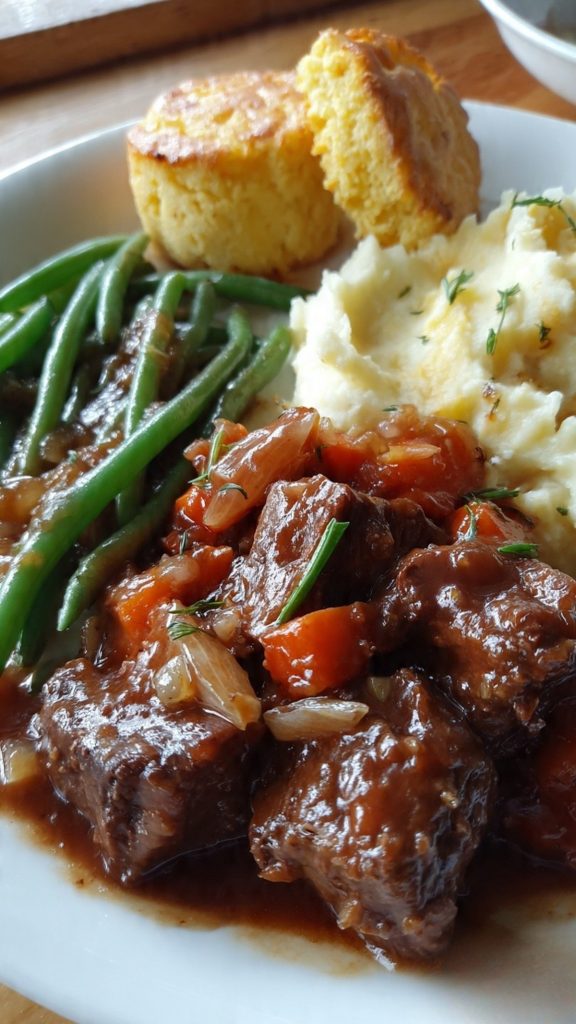
Some recipes just make the whole house feel calmer, and this Tender Pot Roast Over Mashed Potatoes & Gravy is one of them. It’s the kind of meal I reach for when everyone’s a little tired, the weather’s not cooperating, or I just want dinner to feel easy and grounding without being fussy.
What I like about this pot roast is how low-stress it is once it’s in the oven. You get deeply flavored, fall-apart beef, velvety gravy, and ultra-creamy mashed potatoes that you can make ahead and reheat. It’s practical comfort food: satisfying, not complicated, and very forgiving. If you’re looking for a reliable “feed-everyone and relax” kind of recipe, this one earns its place in the rotation.
Quick Guide to Tender Pot Roast Over Mashed Potatoes & Gravy
Click here to get printable version
Time-Tested Ingredients, with a Twist
- 2½ pounds russet potatoes
- ¾ cup heavy cream (plus extra as needed)
- 4 tablespoons unsalted butter (½ stick)
- ½ teaspoon black pepper (plus more to taste)
- 4 ounces brick cream cheese, softened and cut into small cubes
- Kosher salt, to taste
- 2½–3 pounds chuck roast (or rump roast)
- 2½–3 teaspoons kosher salt
- 2 teaspoons black pepper
- 2 tablespoons olive oil (or similar neutral oil)
- 1 large sweet yellow onion, cut into wedges
- 3 large carrots, scrubbed, ends trimmed, cut into chunks
- 2–3 cloves garlic
- 1 tablespoon tomato paste
- 2 cups low-sodium beef broth (plus more as needed)
- 2 teaspoons Worcestershire sauce
- 1 bunch fresh thyme sprigs
- 2 bay leaves
- ½–1 tablespoon Dijon mustard
What to Do
- Cook the potatoes: Peel the russet potatoes and cut them into 1-inch cubes. Place them in a heavy pot, cover with cold, generously salted water, and bring to a boil. Reduce to a steady simmer and cook until the potatoes are easily pierced with a fork, about 10–12 minutes. Drain well so there’s no excess water.
- Warm the cream mixture: While the potatoes cook, add the heavy cream, butter, and black pepper to a small saucepan over low heat. Gently warm until the butter is fully melted and the mixture is steamy but not boiling. Keep warm on the lowest heat so it doesn’t form a skin.
- Make the mashed potatoes: Return the empty potato pot to low heat and add the cream cheese cubes so they start to soften. Working in batches, rice the hot potatoes directly into the pot using a potato ricer (or mash gently if you don’t have one). Pour the warm cream-and-butter mixture over the potatoes and stir just until smooth and creamy. The texture should be fluffy and rich, not gluey. Add a splash more cream if needed. Season with kosher salt and extra pepper to taste. Cover and keep warm on very low heat, or cool and refrigerate to reheat later.
- Prep and sear the beef: Preheat your oven to 325℉ (160℃). Pat the chuck roast dry with paper towels, then season all sides evenly with kosher salt and black pepper. Heat a Dutch oven over medium heat, add the olive oil, and wait until it’s shimmering. Sear the roast for 3–4 minutes per side until well browned. Don’t rush this step; the surface should be deeply caramelized. Transfer the browned beef to a plate.
- Brown the vegetables: In the same pot, add the onion wedges and carrot chunks. Cook, stirring occasionally, for 5–7 minutes until the edges start to brown and the onions soften. Add the garlic and tomato paste and cook for another 1–2 minutes, stirring, until the tomato paste darkens slightly and smells fragrant, but not burned.
- Build the braising liquid: Pour in the beef broth and Worcestershire sauce. Stir and scrape the bottom of the pot with a wooden spoon to release the browned bits — keep scraping until the bottom feels smooth. Return the seared roast (and any juices) to the pot. Tuck in the thyme sprigs and bay leaves. The liquid should rise about halfway up the sides of the meat; if it’s too low, add more broth.
- Braise the roast: Cover the Dutch oven with a tight-fitting lid and transfer it to the preheated oven. Cook for 2 hours, then check the meat: it should offer very little resistance when you pull it with a fork. If it doesn’t shred easily, continue cooking, checking every 20–25 minutes. A 2½-pound roast often takes around 3 hours total. Don’t increase the oven temperature; the slow, gentle heat is what makes the meat tender.
- Finish the gravy and serve: When the roast is fall-apart tender, transfer it to a clean plate or shallow bowl. Whisk the Dijon mustard into the braising liquid and vegetables. Use an immersion blender directly in the pot to blend everything until smooth and glossy, forming a gravy. If it’s thicker than you like, thin it with a bit more broth; if it’s too thin, simmer uncovered for a few minutes to reduce slightly. Taste and adjust seasoning with salt and pepper. Shred the beef with two forks, discarding any large fatty pieces, and return it to the gravy or serve it on top. Spoon the pot roast and plenty of gravy over a bed of mashed potatoes and serve hot.
Ultra-Creamy Potato Tricks
For mashed potatoes that stay ultra-smooth and don’t turn gummy, start with the right starch and technique. Russets are ideal because they’re starchy and light, which gives you fluffiness instead of paste. Always start potatoes in cold, salted water so they cook evenly from the inside out; adding them to boiling water can make the outsides fall apart before the centers are done. Draining well is crucial — leftover water waters down the flavor and can make the texture gluey. Using a potato ricer or food mill keeps the potatoes from being overworked, which is what causes that sticky texture. Finally, make sure all dairy is warm, not cold, when it hits the potatoes so the mixture absorbs evenly and stays silky.
Getting Roast Fall-Apart Tender
The secret to a truly tender pot roast is less about fancy ingredients and more about time, temperature, and patience. Chuck roast has lots of connective tissue that needs slow, moist heat to break down. That’s why cooking low and slow at 325℉ works better than cranking the heat higher. You’re looking for the moment when the collagen has melted enough that the meat pulls apart with almost no pressure. If it still feels springy or you need a knife, it’s simply not done yet, even if the internal temperature looks safe to eat. Keeping the liquid level at least halfway up the meat and using a tight lid helps maintain gentle steam and prevents drying out. Resist opening the oven too often; every time you do, you lose heat and add cooking time.
Smoother, Richer Pan Gravy
This recipe uses the braising vegetables directly to build a gravy, which means extra body without needing much flour or cornstarch. Blending the onions, carrots, and tomato paste into the cooking liquid gives a naturally thick, glossy sauce that clings nicely to the meat and potatoes. For the smoothest texture, use an immersion blender and keep it fully submerged so it doesn’t splatter. If you want an ultra-refined gravy, you can pass it through a fine-mesh strainer after blending. Taste before adjusting thickness — it’s easy to over-thin. If flavors seem dull, a pinch of salt and a small splash of Worcestershire or an extra ½ teaspoon of Dijon will brighten the gravy without making it sharp.
Answers to Popular Questions
Can I make the mashed potatoes ahead and still keep them creamy?
Yes, these mashed potatoes hold up very well if you make them ahead. The key is using russet potatoes plus cream cheese, which helps them stay smooth instead of separating. To prep in advance, cook and mash them as directed, then cool, cover tightly, and refrigerate for up to 2 days. Reheat gently over low heat on the stove or in a covered dish in the oven, stirring in a splash of warm cream or milk to loosen. Avoid microwaving on high, which can create dry or uneven spots; use 50% power if microwaving and stir often.
What if my roast seems dry even though I cooked it for the full time?
If your pot roast feels dry, it’s usually a sign it either cooked too fast, didn’t have enough moisture, or wasn’t cooked long enough for the collagen to fully break down. First, check the braising liquid level next time and make sure it stays at least halfway up the meat; top up with broth if needed. Also, verify your oven temperature with an oven thermometer — many ovens run hotter than the dial. If it’s slightly tough but not overcooked, try shredding it into smaller pieces and stirring it directly into the hot gravy. The meat will absorb some of the liquid back, which can soften the texture and improve juiciness.
How can I reduce the richness without losing that comforting flavor?
This dish is naturally rich from the beef, cream, butter, and cream cheese, but you can lighten it without making it feel “diet” or flat. For the potatoes, you can swap part of the heavy cream for warmed low-fat milk or unsalted chicken broth, and reduce the cream cheese by half while keeping a small amount for texture. For the pot roast, trim visible fat from the meat before searing, and chill the cooked braising liquid briefly so you can spoon off the solidified fat before blending the gravy. Keeping the slow cooking method and aromatic vegetables means you’ll still get deep, comforting flavor with a bit less heaviness.
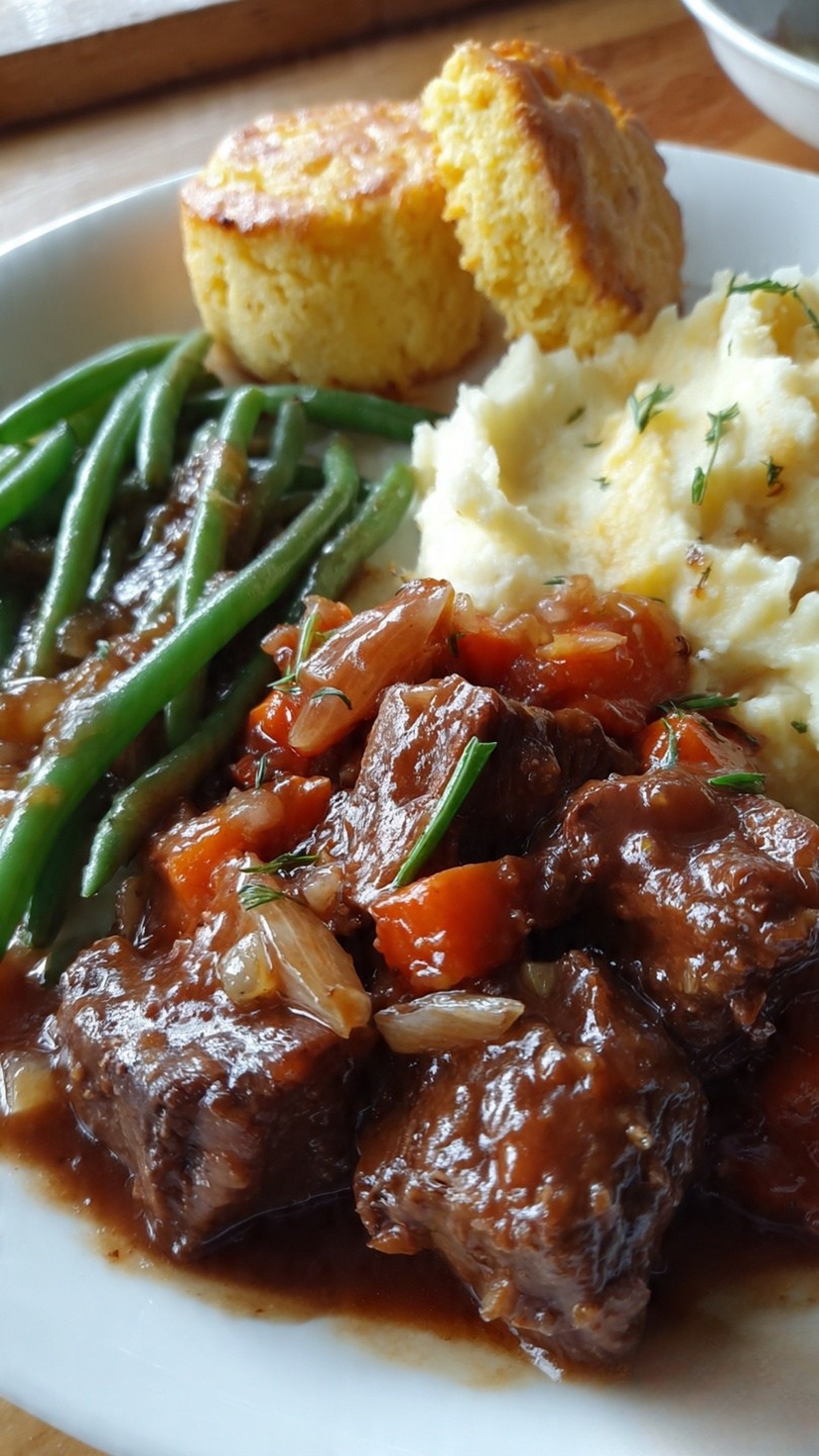
Tender Pot Roast Over Mashed Potatoes & Gravy
Equipment
- Dutch oven
- Heavy pot
- saucepan
- Potato ricer
- immersion blender
Ingredients
Mashed Potatoes:
- 2 1/2 pounds russet potatoes
- 3/4 cup heavy cream plus extra as needed
- 4 tablespoons unsalted butter ½ stick
- 1/2 teaspoon black pepper plus more to taste
- 4 ounces brick cream cheese softened and cut into small cubes
- Kosher salt to taste
Pot Roast:
- 2 1/2-3 pounds chuck roast or rump roast
- 2 1/2-3 teaspoons kosher salt
- 2 teaspoons black pepper
- 2 tablespoons olive oil or similar
- 1 large sweet yellow onion cut into wedges
- 3 large carrots scrubbed, ends trimmed, cut into chunks
- 2-3 cloves garlic
- 1 tablespoon tomato paste
- 2 cups low-sodium beef broth plus more as needed
- 2 teaspoons Worcestershire sauce
- 1 bunch fresh thyme sprigs
- 2 bay leaves
- 1/2-1 tablespoon Dijon mustard
Instructions
- Assemble all ingredients and equipment before starting.
For Mashed Potatoes:
- Peel the russets and cut into roughly 1-inch pieces. Place in a heavy pot, cover with cold water, season with salt, and bring to a boil. Cook until a fork slides through the potatoes easily, about 10–12 minutes, then drain thoroughly.
- In a small saucepan over low heat, combine the heavy cream, butter, and black pepper. Warm gently until the butter melts and the mixture is heated through—do not boil.
- Return the drained potatoes to the warm pot, add the cubed cream cheese, and press the potatoes through a potato ricer in batches into the pot. Pour the warm cream and butter over the riced potatoes and stir until completely smooth. Add more cream if you prefer a looser texture and season with kosher salt and extra pepper to taste.
For Pot Roast:
- Heat the oven to 325°F (160°C). Pat the roast dry and season all over with the kosher salt and black pepper. Warm the olive oil in a Dutch oven over medium heat until shimmering, then sear the roast 3–4 minutes per side until well-browned. Remove the meat to a plate.
- Add the onion wedges and carrot chunks to the same pot and cook 5–7 minutes, stirring occasionally, until they begin to caramelize. Stir in the garlic and tomato paste and cook another 1–2 minutes to develop flavor.
- Pour in the beef broth and add the Worcestershire sauce, scraping up any browned bits from the pan. Nestle the roast back into the pot and add the thyme sprigs and bay leaves. The liquid should reach roughly halfway up the sides of the meat; add extra broth if needed.
- Cover with a tight-fitting lid and transfer the pot to the preheated oven. Bake for 2 hours, then test the roast with a fork—if it doesn’t fall apart easily, continue cooking and check every 20–25 minutes until the meat shreds with little resistance (a 2½-pound roast can take closer to 3 hours).
- When the roast is fork-tender, remove the meat to a clean plate. Stir the Dijon mustard into the pan juices and use an immersion blender to puree the cooking liquid and softened vegetables until silky. If the gravy is too thick, thin with additional beef broth. Shred the beef, return to the pot if desired to warm, and serve alongside the mashed potatoes with plenty of gravy.